
Aircon Guide · Singapore · Updated September 2026
Types of Aircon in Singapore, Explained
What System 1, 2, 3 and 4 actually mean, how wall-mounted, cassette and ducted units differ, and what each means when it is time to service it.
The short answer
Most Singapore homes use split aircons: an indoor unit on the wall inside, and an outdoor unit outside, joined by copper pipes. System 1 means one outdoor unit cooling one room. System 2, 3 or 4 means one outdoor unit cooling two, three or four rooms. Offices and shops more often use ceiling cassette or ducted units.
The two halves of a split aircon
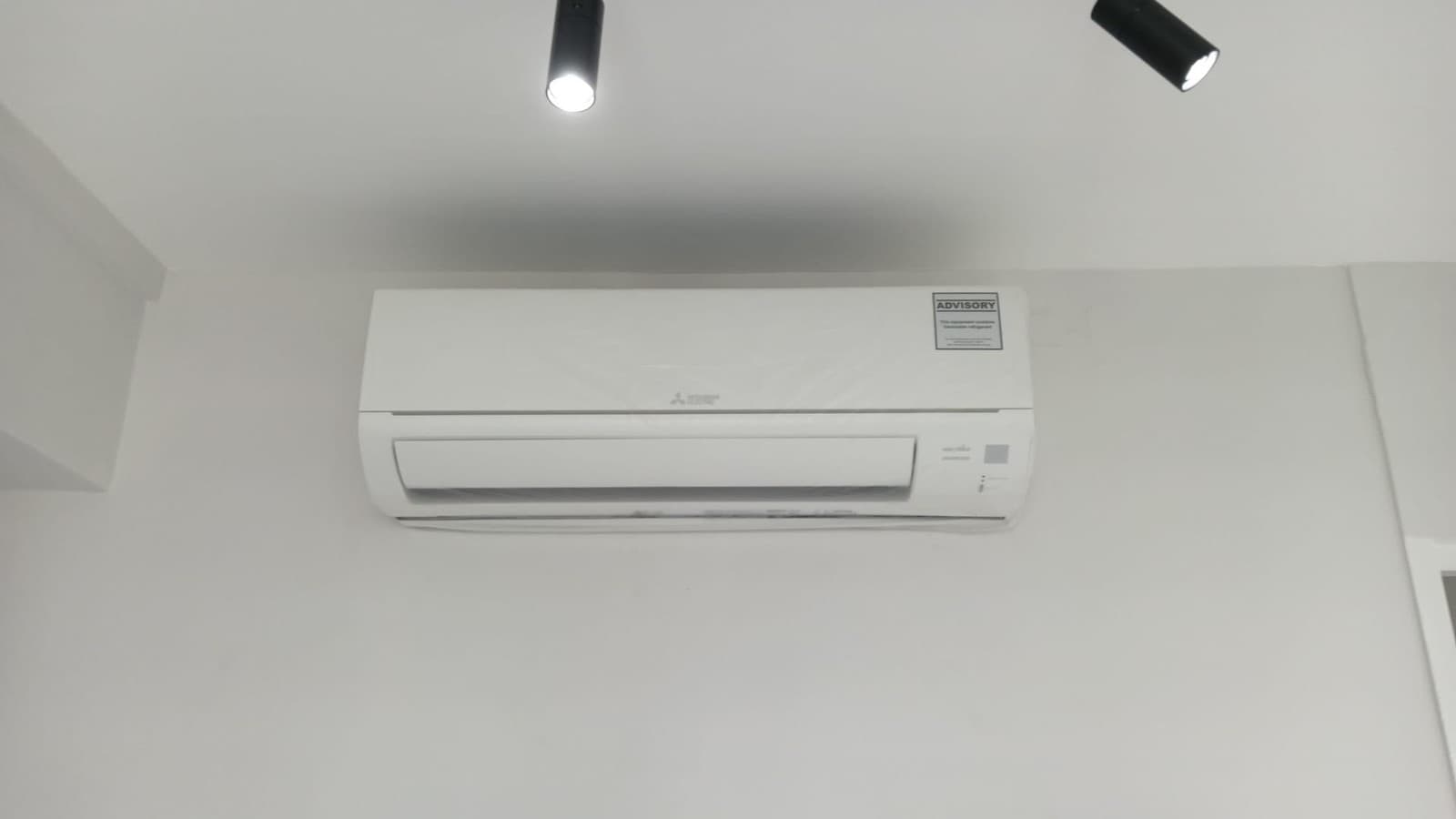
The indoor unit (sometimes called the fan coil) blows the cold air into your room. Inside it are the filter, the cooling coil and the tray that catches water. This is the part that collects dust and mould, and the part a normal service cleans.
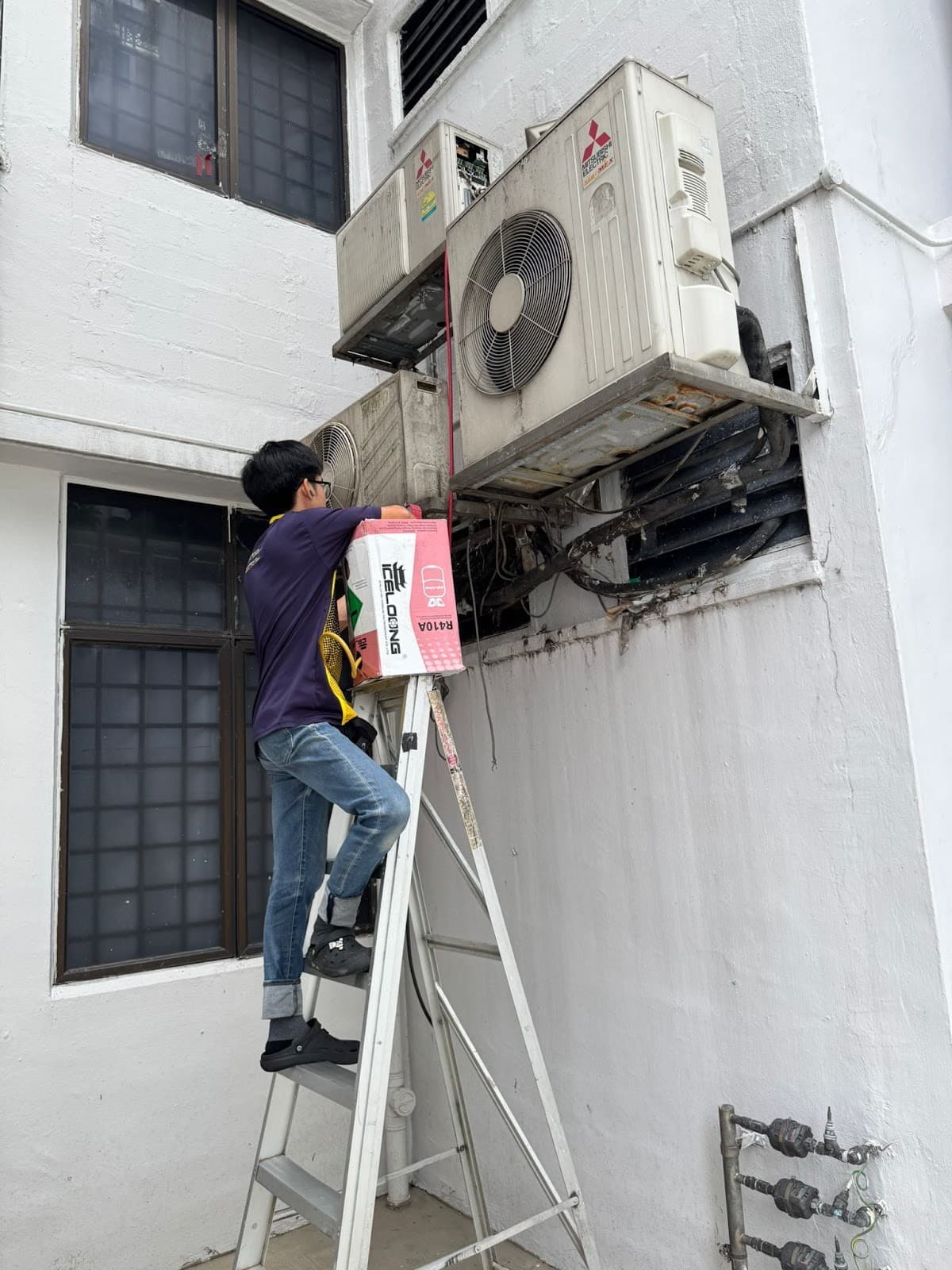
The outdoor unit (the condenser) holds the compressor and pushes the heat from your room outside. In HDB flats and condos it sits on the aircon ledge. It needs cleaning too, just less often: see condenser cleaning.
System 1, 2, 3 and 4: what the numbers mean
The number is how many indoor units one outdoor unit powers. That is all it means.
System 1
1 outdoor → 1 indoor
One room: a studio, a shop, or a single room cooled on its own.
System 2
1 outdoor → 2 indoor
Two rooms, such as two bedrooms, or a bedroom and the living room.
System 3
1 outdoor → 3 indoor
Three rooms. A common setup in HDB flats and condos.
System 4
1 outdoor → 4 indoor
Four rooms, usually the living room plus three bedrooms.
Single-split (System 1)
Every room has its own outdoor unit, so one breaking down only affects that room. The trade-off is more outdoor units to find space for.
Multi-split (System 2, 3, 4)
One outdoor unit for several rooms saves ledge space. But everything connected to it shares one compressor and one set of pipes, so a fault or a gas leak can take out cooling in every room at once.
Types of indoor unit
The system number tells you how many units there are. The type tells you what they look like and where they are mounted, which is what changes how long a service takes. Buying one and not sure how big? Work out the right BTU for your room.
Wall-mounted
Most homes: HDB flats, condos and landed
The long white unit high up on the wall. It is the most common type in Singapore homes, the easiest to reach, and the quickest to service.
Servicing: Standard servicing rate.
Ceiling cassette
Offices, shops, and some condo living rooms and landed homes
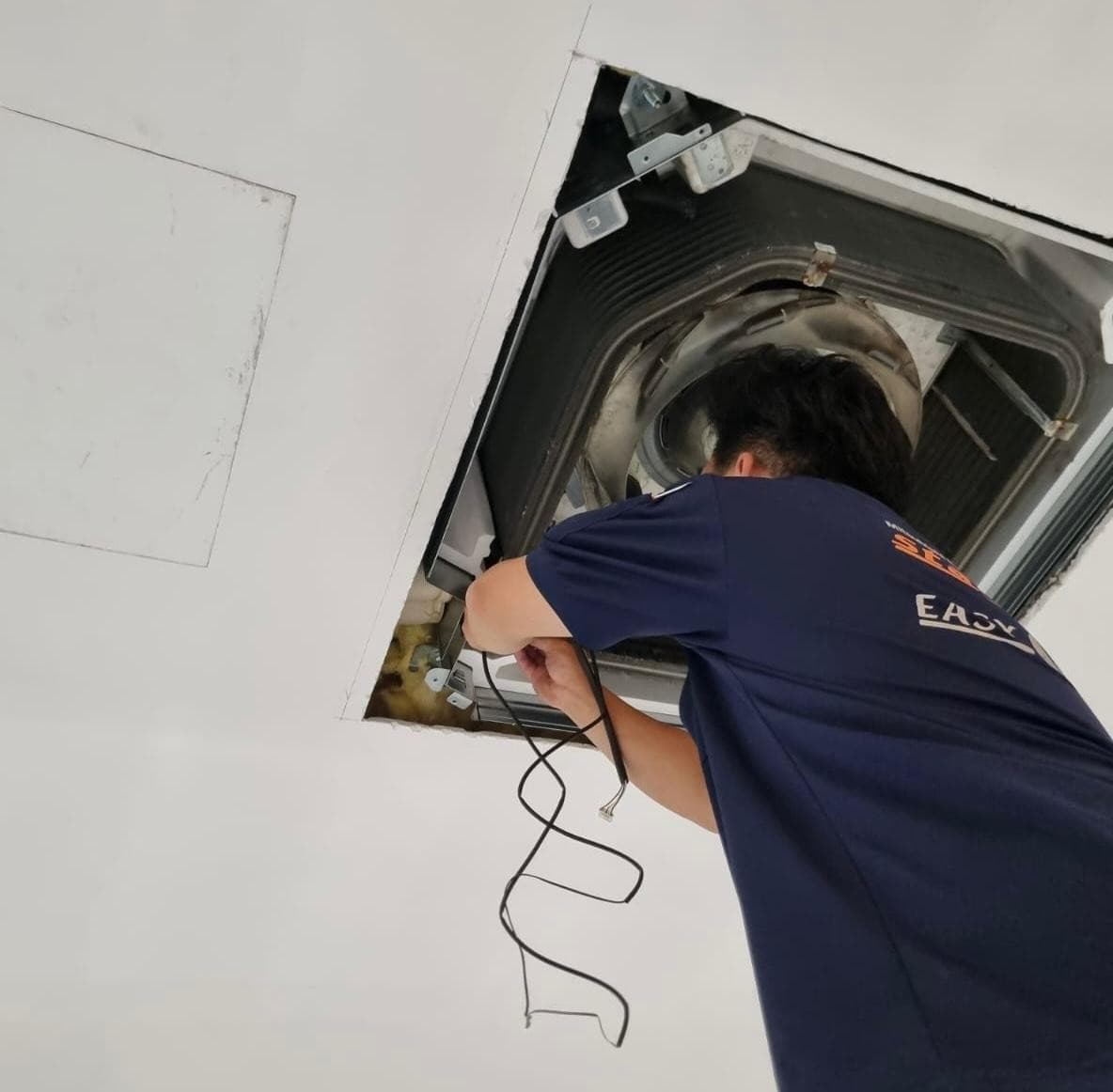
A square unit set into the ceiling, blowing air out in four directions. It cools a large open space evenly, and only the flat panel shows.
Servicing: Takes longer to open up and clean than a wall-mounted unit, so it costs a little more. Someone has to work from a ladder with their head inside the ceiling.
Ducted (concealed)
Offices, and some condos and landed homes with a false ceiling
The unit is hidden above a false ceiling, and cold air reaches the room through ducts and slim grilles. You see the grilles, not the aircon.
Servicing: Harder to reach, because the unit sits behind a ceiling access panel. Like cassette units, it costs a little more to service.
Window aircon
Older flats
One box that sits in an opening in the wall or window, with the cooling side facing in and the hot side facing out. There is no separate outdoor unit. Far less common today than split systems.
Portable aircon
Rented rooms, or temporary cooling
A unit on wheels with a hose that vents hot air out of a window. No installation, but it is noisier and uses more electricity for the cooling you get.
VRV / VRF systems
Large commercial systems where one outdoor system runs many indoor units, each controlled separately. You find them in offices and bigger buildings. Because every building is set up differently, we quote these after we see them.
Inverter vs non-inverter
This is about how the compressor in the outdoor unit runs, not what the aircon looks like. Any of the types above can be inverter or non-inverter.
A non-inverter compressor runs at full power until the room is cold, switches off, then switches back on when the room warms up. An inverter compressor speeds up and slows down instead, so the temperature stays steadier and it uses less electricity. Most new aircons today are inverter models.
Either way, the servicing schedule is the same. Here is how often to service your aircon.
Refrigerant: R22, R410A and R32
The gas inside the pipes also varies with the age of the aircon. Newer units mostly use R32, units from roughly 2005 to 2015 use R410A, and older units use R22. The type is printed on the label on the outdoor unit, and it matters if your aircon ever needs a gas top-up, because each gas is priced differently.
What your aircon type means for servicing
- • Every indoor unit is serviced separately, so a System 3 is three units to service, and multi-unit visits cost less per unit.
- • Wall-mounted units are the standard rate. Ceiling cassette and ducted units take longer and cost a little more.
- • Deep cleans are priced per unit too. A chemical wash starts from $110 for a wall-mounted unit.
When you message us, tell us your system and unit type (for example “System 3, all wall-mounted”) and we will give you the price upfront. See the full price list.
Common questions
What does System 4 aircon mean?
System 4 means one outdoor unit connected to four indoor units, so one outdoor unit cools four rooms. System 1 is one outdoor unit and one indoor unit, System 2 has two indoor units, and System 3 has three.
Is System 3 or System 4 better?
Neither is better. The number simply matches how many rooms one outdoor unit cools. Choose by how many rooms you want cooled. A bigger system also means that if its outdoor unit stops working, more rooms lose cooling at once.
What is the difference between single-split and multi-split?
Single-split (System 1) is one outdoor unit for one indoor unit. Multi-split (System 2, 3 or 4) is one outdoor unit for several indoor units. Multi-split saves space on the aircon ledge, while separate single-splits keep each room independent.
Which type of aircon is easiest to maintain?
Wall-mounted units. They are the easiest to reach, so servicing is quicker and costs less than for ceiling cassette or ducted units.
Do inverter aircons need less servicing?
No. An inverter aircon saves electricity, but its filter and cooling coil collect dust and mould at the same rate as any other aircon, so it needs the same servicing schedule.
How do I find out what system I have?
Count how many indoor units are connected to each outdoor unit: that number is your system number. The outdoor unit also has a label (the nameplate) showing the model and the refrigerant it uses, such as R32 or R410A. If you are unsure, send us a photo of the label on WhatsApp.
Not sure what you have?
Send us a photo of your indoor and outdoor units on WhatsApp. We will tell you what it is and what it costs to service.