
DIY Guide · Singapore · Updated September 2026
How to Clean Your Aircon at Home, Safely
Washing the filters yourself every 2–4 weeks is the one DIY job that makes a real difference. Here’s how to do it, what cleaning sprays can and can’t do, and where to stop.
The short version
- • Do it yourself: wash the filters, wipe the front panel, keep the outdoor unit clear.
- • Skip: spraying cleaners into the unit, bending back the coil fins, poking the drain pipe.
- • Leave to a technician: the blower wheel, drain tray, cooling coil and gas.
How to clean your aircon filter, step by step
This is for wall-mounted units, the kind in most HDB flats and condos. It takes about 15 minutes, plus drying time.
- 1
Switch it off at the wall
Turn the aircon off with the remote, then switch off the power at the isolator switch or plug. Never open the unit while it has power.
- 2
Lift the front panel
On most wall units the front panel lifts up from the bottom edge and clicks into an open position. You will see one or two mesh filters covering the cooling coil.
- 3
Slide the filters out
Pull each filter gently down and out. If there are small extra filters clipped on top (deodorising or “bio” filters), unclip them and set them aside.
- 4
Vacuum or tap off loose dust
Do this before any water touches the filter. Wet dust turns to paste and clogs the mesh.
- 5
Rinse from the back
Run lukewarm tap water through the filter from the side that faced the coil, so dust is pushed out the way it came in. For greasy filters (near a kitchen), use a little mild dish soap and a soft brush.
- 6
Dry fully, in the shade
Shake off the water and let the filters air-dry completely. Strong direct sun can warp the plastic frame. Never refit a wet filter.
- 7
Refit and close
Slide the filters back in the same way, close the front panel until it clicks, and switch the power back on. Never run the aircon without its filters.
How often: every 2–4 weeks if the aircon runs daily. Homes near a main road or with pets may need every 2 weeks. If the filter looks grey instead of white, it’s due.
Three more things you can safely do
Front panel and flaps
When dusty
Wipe the front panel and the flaps where the air comes out with a damp cloth and a little mild soap. Don’t push the motorised flaps by hand; move them with the remote.
Use the “clean” button, if you have one
After use
Many newer remotes have a self-clean or internal-clean mode. It runs the fan for a while after you switch off, to dry the inside so mould grows more slowly. It dries; it doesn’t wash anything.
Keep the outdoor unit clear
Every few months
Make sure nothing blocks the outdoor unit: leaves, boxes, laundry or plants. Only do this if you can reach it from inside. Never climb out onto an aircon ledge.
Are aircon cleaning sprays worth it?
Foam cleaning sprays and cleaning kits are popular, and it’s easy to see why: spray, wait, and the unit smells fresh. But they do less than most people expect.
What they do
- • Loosen dust on the front of the cooling coil
- • Leave a fresh smell for a while
What they don’t
- • Reach the blower wheel, where most mould and smell come from
- • Clean the back of the coil or the drain tray
- • Remove mould that is already growing
There are also real downsides. The dirt the foam loosens runs down into the drain tray and pipe. If the drain is already partly blocked, the unit can start leaking water. Spray that reaches the circuit board or sensors beside the coil can damage them, which is why even the spray makers warn you to keep it off electrical parts.
Some manufacturers go further. Daikin tells owners not to use commercial cleaning agents, because they can damage the plastic parts of the coil and cause water leaks.
The biggest risk is the fresh smell itself: it covers up mould that is still there, so a unit that needs a deep clean gets put off for longer. If you do use a spray, keep it to the coil face, keep it off the electrics, and treat it as a stop-gap, not a service.
Where DIY stops
These parts are where the dirt that causes smells, leaks and weak cooling actually builds up. Cleaning them means opening the unit up.
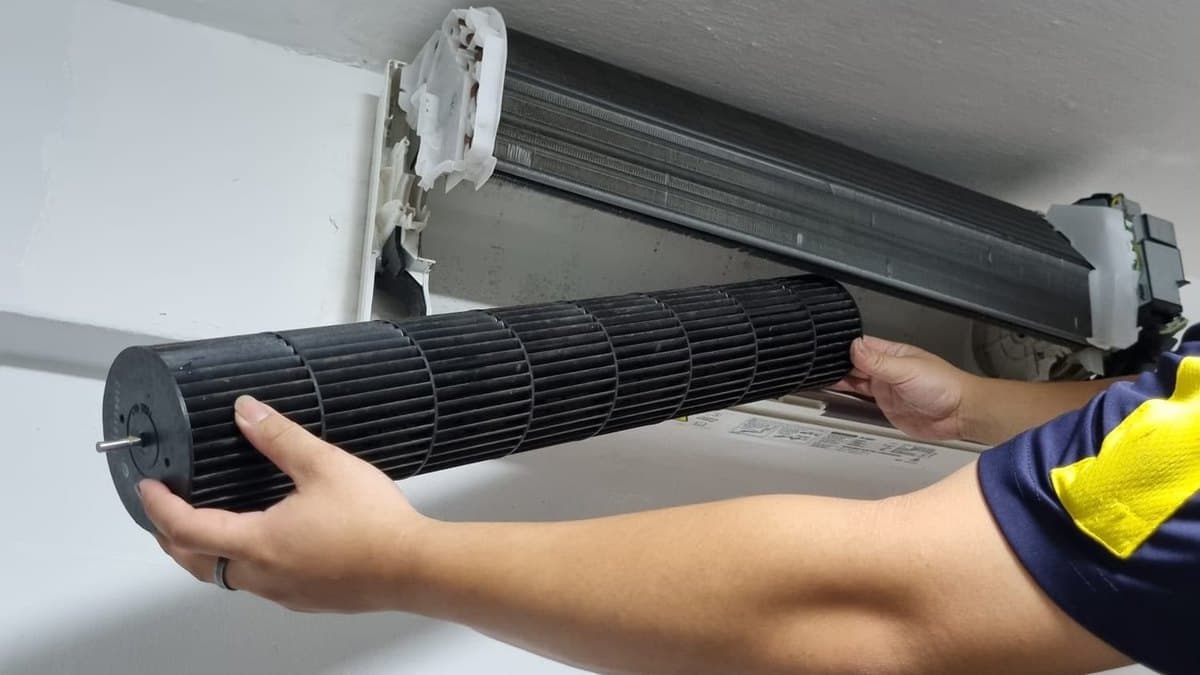
The blower wheel
The drum-shaped fan under the coil is where the black mould spots and musty smell usually come from. You can’t reach it properly through the air outlet. Cleaning it means taking the front of the unit off, and for heavy mould, taking the fan out.
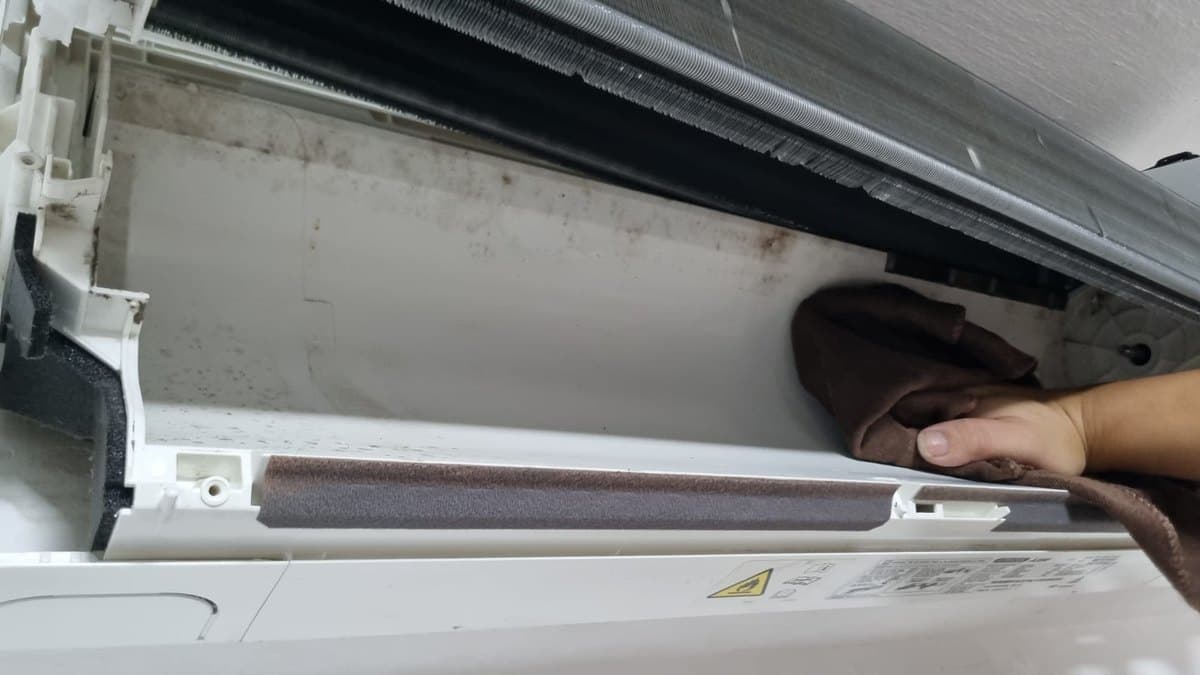
The drain tray and pipe
Water from the coil collects in a tray under it and runs out through a pipe inside the wall. Mould and slime build up here and cause dripping. Poking the pipe with wire can push the blockage further in or crack the pipe.
The cooling coil
The thin metal fins bend flat very easily, which blocks airflow for good. Water sprayed at the coil also runs straight towards the circuit board and sensors beside it.
Gas, pressure and electrics
Checking refrigerant needs gauges, and anything inside the control box carries mains power. These are not DIY jobs.
Filters clean, but still smelly or dripping?
Then the dirt is past the filter. A general service is from $55 for one unit, and a chemical wash from $110.
Signs a filter clean isn’t enough
The smell comes back even with clean filters
The mould is on the fan or coil, beyond the filter. This usually needs a chemical wash.
Why your aircon smells →Water drips from the indoor unit
The drain tray or pipe is blocked. A service clears it before it damages your wall or floor.
Aircon leaking water →Clean filters, but it still isn’t cold
The coil may be caked, or the gas may be low. Both need a technician to check.
Aircon not cold →You can see black spots through the air outlet
That’s mould on the blower wheel. Sprays won’t remove it; it needs a proper clean.
Chemical wash →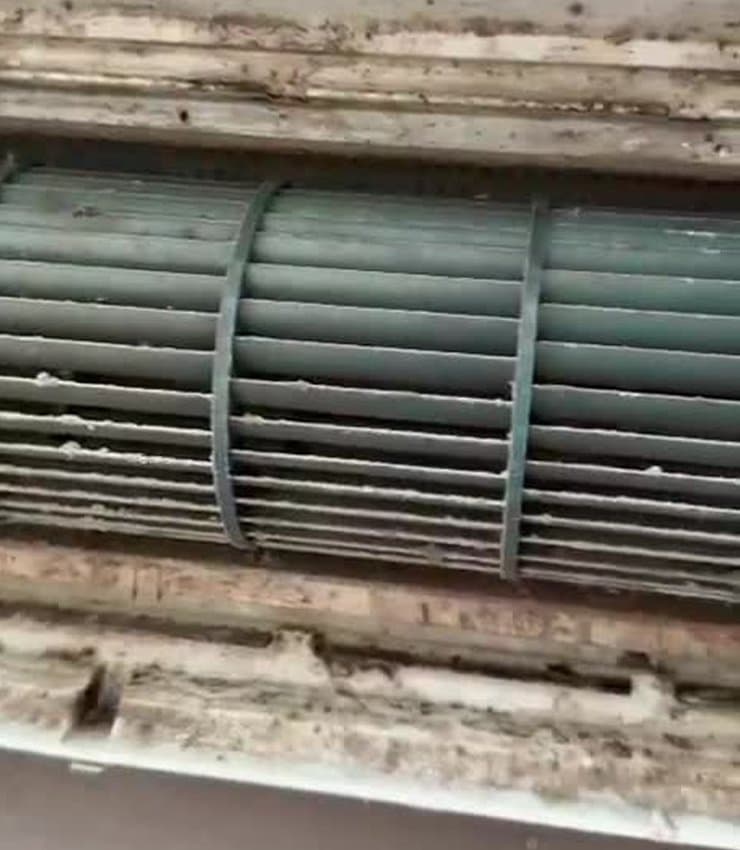
Regular filter cleaning makes each service last longer, but it doesn’t replace one. For daily use, see how often to service your aircon, or what a technician actually does in a standard aircon service.
Common questions
How often should I clean my aircon filter?
Every 2 to 4 weeks if the aircon runs daily, which is most bedroom units in Singapore. Homes near a main road or with pets may need it every 2 weeks. It takes about 15 minutes plus drying time.
Can I wash my aircon filter with soap?
Yes, a little mild dish soap is fine, especially for greasy filters near a kitchen. Rinse it out well, then let the filter dry completely in the shade before putting it back. Avoid strong chemicals and hot water, which can damage the mesh.
Are aircon cleaning sprays safe to use?
They can loosen dust on the front of the cooling coil, but they don’t reach the blower wheel, where most mould and smells come from. The loosened dirt runs into the drain tray and can cause leaks if the drain is already partly blocked. Some manufacturers, including Daikin, tell owners not to use commercial cleaning agents on the unit at all.
Can I service my aircon myself?
You can do the regular upkeep yourself: washing the filters, wiping the panel and keeping the outdoor unit clear. A proper service also cleans the coil, blower wheel and drain, and checks the gas. Those parts need the unit opened up and the right tools, so they are best left to a technician.
If I clean the filters regularly, do I still need servicing?
Yes, but you will get more out of each service. Clean filters keep dust off the coil for longer, but moisture still makes mould grow on the fan and in the drain. Most homes with daily use still need a service every 3 to 4 months.
Why does my aircon still smell after I cleaned the filter?
Because the smell usually isn’t coming from the filter. Musty smells come from mould on the blower wheel, the cooling coil or the drain tray, which a filter wash doesn’t reach. If the smell comes back within a day or two of a filter clean, the unit needs a proper clean, usually a chemical wash.
Want the parts you can’t reach cleaned?
A general service cleans the coil, blower and drain, and checks the gas. From $55 for one unit, same-day and island-wide.